
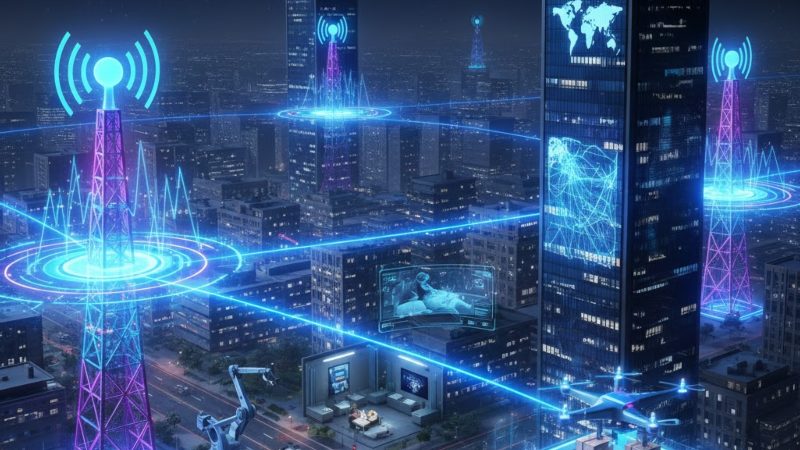
In 2026, 5G Technology in 2026 is no longer just a buzzword — it has become a cornerstone of modern communication. From faster mobile internet to smart cities and autonomous vehicles, 5G is transforming the way people connect, work, and interact with technology. With high-speed data, low latency, and massive device connectivity, 5G is enabling innovations that were impossible with previous network generations.
What Is 5G Technology?
5G, or fifth-generation wireless technology, is the latest advancement in mobile networks. Unlike 4G, 5G provides ultra-fast internet speed, near-zero latency, and the ability to connect billions of devices simultaneously. This technology is not only about faster downloads but also about enabling smarter systems in homes, businesses, and cities.
5G Technology in 2026 is expected to cover most urban areas worldwide, improving mobile connectivity, supporting remote work, and enhancing entertainment experiences.
5G and Smart Cities
One of the most exciting applications of 5G Technology in 2026 is the development of smart cities. With 5G connectivity, city infrastructure can communicate in real time. Traffic lights, public transportation, and utilities can be optimized for efficiency.
Smart sensors and IoT (Internet of Things) devices rely on 5G networks to send data instantly. This helps reduce congestion, save energy, and improve public services. Cities using 5G networks can offer residents a better, more connected experience.
Impact on Mobile Devices
Smartphones and other mobile devices have already benefited from 5G Technology in 2026. Streaming high-quality videos, playing online games, and video conferencing have become smoother than ever.
Tech companies like Apple and Samsung are producing 5G-compatible devices to leverage the full potential of this technology. Users can now download large files in seconds and enjoy low-latency gaming experiences.
5G in Business and Industry
Businesses are adopting 5G Technology in 2026 to improve efficiency and connectivity. Manufacturing plants use 5G for real-time monitoring of machinery. Retail stores implement 5G-powered systems to track inventory and enhance customer experiences.
Remote work is also more effective with 5G. Employees can participate in high-quality video calls and access cloud-based tools seamlessly. Logistics companies use 5G to optimize supply chains and reduce delivery times.
Healthcare Transformation
Healthcare is another sector benefiting from 5G Technology in 2026. Remote surgeries, telemedicine, and real-time patient monitoring are possible due to high-speed 5G connectivity. Doctors can analyze data and consult with specialists instantly, regardless of location.
Hospitals equipped with 5G networks can manage large amounts of medical data efficiently. AI-powered diagnostic tools also work faster, helping improve patient outcomes.
Entertainment and Media
The entertainment industry has been revolutionized by 5G Technology in 2026. Streaming platforms can provide ultra-HD and even 8K content without buffering. Virtual reality (VR) and augmented reality (AR) applications now function smoothly, providing immersive experiences for gaming and online events.
With 5G, live events can be streamed in real time to millions of viewers globally. Media companies can offer interactive experiences that were impossible with older networks.
Challenges of 5G Technology
Despite its benefits, 5G Technology in 2026 faces challenges. High infrastructure costs, network security, and data privacy are major concerns. Deployment in rural areas is slower due to logistical and financial challenges.
Users and businesses must ensure secure connections and protect sensitive data. Governments and telecom companies are working together to address these challenges and provide safe, reliable 5G networks worldwide.
Future Outlook
The future of 5G Technology in 2026 is promising. As coverage expands, it will enable more advanced technologies like autonomous vehicles, smart healthcare systems, and intelligent industrial operations.
Integration with AI, IoT, and edge computing will further enhance efficiency and innovation. 5G is not just a faster network — it is the backbone of the next generation of technology.
Conclusion
In conclusion, 5G Technology in 2026 is transforming connectivity across all sectors. From smart cities and healthcare to mobile devices and entertainment, 5G enables faster, smarter, and more reliable communication.
Adoption of this technology will continue to grow, creating new opportunities for businesses and improving the quality of life for people around the world. 5G is truly revolutionizing the way we connect and interact with technology. for more information visit our site
I gotta say, 59rbet is pretty decent. Good odds and the platform is pretty user friendly. For a reliable online option, try 59rbet.