
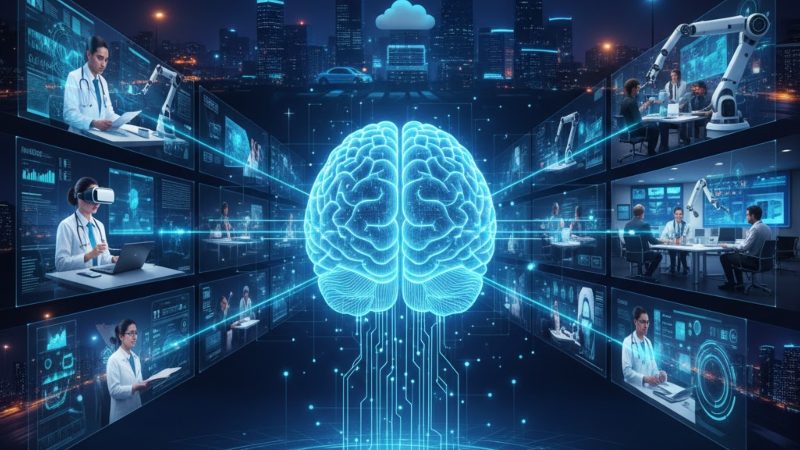
In today’s digital world, Artificial Intelligence in 2026 is becoming one of the most powerful forces behind technological growth. From smartphones to smart cities, AI is transforming how we live, work, and communicate. What once seemed like science fiction is now a daily reality. Businesses, healthcare systems, educational institutions, and even households are using AI to improve efficiency and decision-making.
Artificial intelligence refers to machines and software that can perform tasks normally requiring human intelligence. These tasks include learning, problem-solving, language understanding, and pattern recognition. In 2026, AI systems are more advanced, faster, and more accurate than ever before.
The Growth of Artificial Intelligence in 2026
The demand for Artificial Intelligence in 2026 is increasing rapidly. Companies are investing billions of dollars into AI research and development. Tech giants like OpenAI and Google are continuously improving AI models to make them more intelligent and reliable.
AI is now integrated into many everyday applications. Voice assistants understand natural language better. Recommendation systems predict user preferences with high accuracy. Even search engines use AI to deliver more relevant results.
The rapid improvement in machine learning algorithms and data processing power has made AI more accessible to businesses of all sizes.
Artificial Intelligence in Healthcare
One of the most impactful uses of Artificial Intelligence in 2026 is in healthcare. AI-powered systems help doctors diagnose diseases at early stages. Machine learning models analyze medical images and detect patterns that humans might miss.
Hospitals use AI to manage patient records, schedule appointments, and monitor patient health in real time. AI chatbots also provide basic medical advice and reduce the workload of healthcare professionals.
This technology not only improves accuracy but also saves time and reduces healthcare costs.
AI in Business and Automation
Businesses are using Artificial Intelligence in 2026 to automate repetitive tasks and improve productivity. AI systems can handle customer service inquiries, manage inventory, and analyze financial data.
For example, AI chatbots provide instant responses to customers 24/7. Automated systems analyze sales data and predict future demand. This helps companies make better strategic decisions.
Automation powered by AI reduces human error and allows employees to focus on creative and strategic work instead of routine tasks.
Artificial Intelligence in Education
Education is also evolving with Artificial Intelligence in 2026. Online learning platforms use AI to personalize lessons according to student performance. Smart tutoring systems identify weak areas and provide targeted exercises.
Teachers use AI tools to grade assignments faster and track student progress more effectively. Students can access AI-powered learning assistants that explain complex topics in simple ways.
This personalized learning experience improves understanding and engagement.
AI and Smart Devices
Smart devices are becoming smarter because of Artificial Intelligence in 2026. Smartphones now use AI to enhance camera quality, optimize battery usage, and improve security features like facial recognition.
Companies like Apple and Samsung integrate AI into their devices to deliver better user experiences.
Smart home systems also rely on AI to learn user habits and automatically adjust lighting, temperature, and security settings.
Challenges of Artificial Intelligence in 2026
Although Artificial Intelligence in 2026 offers many benefits, it also raises concerns. Data privacy and security are major issues. AI systems require large amounts of data, and protecting that data is essential.
There are also concerns about job displacement due to automation. As AI takes over repetitive tasks, some traditional jobs may decline. However, new opportunities in AI development, data analysis, and cybersecurity are also emerging.
Ethical use of AI is another important topic. Developers must ensure that AI systems are fair, unbiased, and transparent.
The Future of Artificial Intelligence in 2026
The future of Artificial Intelligence in 2026 looks promising. AI will continue to evolve and become more integrated into daily life. Self-driving vehicles, advanced robotics, and smart cities will rely heavily on AI systems.
AI-powered virtual assistants will become more human-like in conversation and understanding. Businesses will use predictive analytics to stay ahead of market trends.
As technology advances, AI will play a central role in shaping the global economy and society.
Conclusion
In conclusion, Artificial Intelligence in 2026 is transforming industries and improving everyday life. From healthcare and education to business and smart devices, AI is driving innovation and efficiency.
While challenges such as privacy and ethical concerns exist, the benefits of AI are undeniable. As long as it is used responsibly, Artificial Intelligence in 2026 will continue to create new opportunities and reshape the future of technology. for more information visit our site